
On December 9th, Bucknell University Press celebrates the release of two highly anticipated titles: the paperback edition of Citizens of Memory: Affect, Representation, and Human Rights in Postdictatorship Argentina by Silvia R. Tandeciarz, who was featured in our November 10th guest blog post, and Narrating Infertility in Spain by Catherine Bourland Ross.
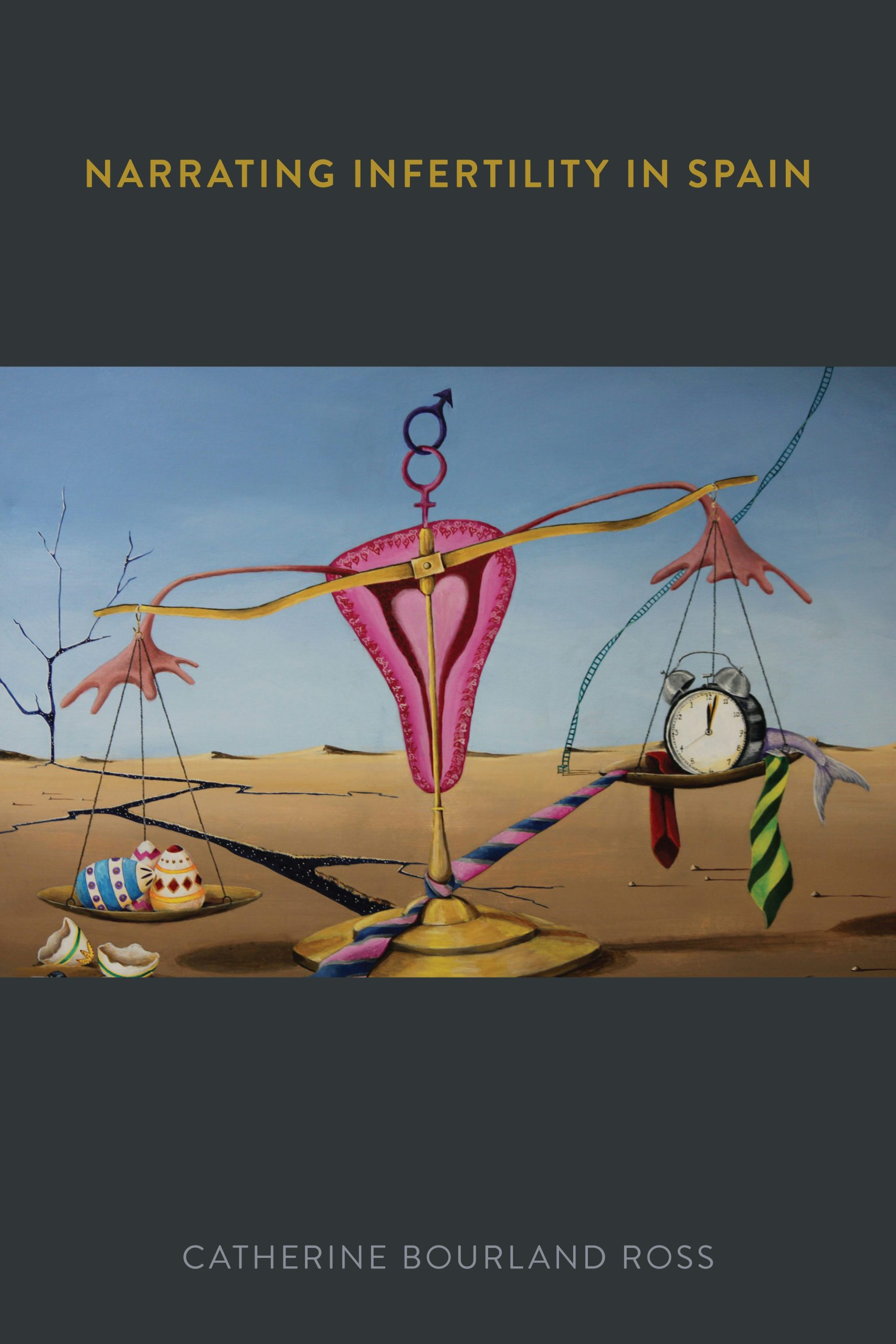
Narrating Infertility in Spain, the newest title in the Campos Ibéricos: Bucknell Studies in Iberian Literatures and Cultures series at Bucknell University Press and “the first study of infertility in post-2008 female-authored texts, analyzes discussions of adoption, assisted reproduction, egg and sperm donation, and the decision not to have children due to economic or social instability. By examining the work of writers and vocal activists Silvia Nanclares, Raquel Sánchez-Silva, Samanta Villar, Laura Freixas, and Diana López Varela, Ross situates infertility in Spain within the cultural context of the Great Recession, while considering it as a business, a crisis, a stigma, and a class issue, and offering broader understandings of contemporary fertility challenges in Spain and beyond.”
We sat down with Dr. Ross to discuss her upcoming book, the illusion of choice in the contemporary fertility landscape, and the importance of reproductive literature on our bookshelves.
BUP: Narrating Infertility in Spain takes on infertility in post-2008 Great Recession Spain as a business, a stigma, a crisis, classist, and as a choice. What was your narrative process throughout the writing of the book?
Ross: The first thing I noticed about my own research is that it is almost always personal. There’s always something in my life that I am thinking about, or processing, or figuring out. And the way I deal with that is to research. I read more about it, I think deeply about it, and I try to find what other people have said. And that’s how I got into this from the beginning. I travel to Spain every other year, and so I’ve spent a lot of time in bookstores, just seeing what’s been published recently and then reading it. And then that leads me to find other books that are similar. So it’s a long process of discovery: going to conferences, hearing other people talk about other books, or when I present, making some sort of a connection. It’s this ongoing process of discovery and reading and thinking and making connections among the different things that I’m reading until I have a larger project like this.
Sometimes the books just jump out, and you’re like, “Oh my gosh, this is exactly what I was looking for in my life.” And sometimes you read a book that’s a little bit more challenging or doesn’t quite have that connection. Then you start to see how they’re similar throughout—that’s the through line. And all of these were very autobiographical. Even if they weren’t autobiographies, they had an autobiographical tone, or something that the author had experienced. And I loved that about the work that I was reading, and that really spoke to me.
BUP: Historically, infertility has been treated as a ‘women’s issue,’ something discussed throughout the book. Only recently has it begun to be considered as a ‘men’s issue,’ as well, regarding the declining sperm count you briefly mention. Regardless, you don’t take either of these positions; for you, infertility in post-recession Spain is an economical, capitalist, neoliberal issue. In what ways do neoliberalism, capitalism, and hyperconsumerism shape the ways we view fertility, infertility, and reproductive assistance technology?
Ross: I think back to going through my own infertility journey, how much pressure I felt from everyone around me to become a mother. Looking back on it now, obviously family, but friends, even work colleagues, were telling me how much I would miss out on if I didn’t continue to try to become a mother. Why? Why is there that pressure on women to conform? And once again, this is how I got started—my previous research was all about motherhood, why women become mothers, and why they felt the pressure to become mothers, and then how women narrated their stories of being mothers as not what they had expected motherhood to be.
As I read these narratives about women dealing with infertility in Spain, so much of the capitalist influence of society showed up in these books. This idea that it’s not just your parents that are pressuring you to become a mother, or your friends are like, “Well, I’m a mom, you should also be a mom.” It’s not just that; it’s also that you can buy anything. So you can’t become a mom just by having intercourse with a man. How about trying this? How about buying sperm? How about buying an egg? How about buying the doctor’s visits? How about buying these different drugs? There is a constant capitalist pressure to continue to consume. And then you’re told that this is all a choice, right?
I remember—I think I put this in the introduction to the book—this idea that I’ve always been able to do everything I wanted to do. I wanted to go to college? I went to college. I wanted to go to graduate school, I wanted a tenure track job? I got a tenure track job. I wanted tenure, I got [tenure]. Coming from a position of privilege, everything to me has always been that I work hard and I get what I worked for. And then I got to this point where I wanted to have a child and I couldn’t. But I’ve always been told that if you work hard and you do all the right things and make all the right “choices,” then you get to have what you want. And this was a time that that was not happening for me. But if you continue to make the right choice, which is going through the fertility industry, paying all this money—it’s the constant salesmanship of going further to try to respond to what I considered this need that I had to conform to womanhood.
BUP: While your text is primarily focused on the influence of the 2008 recession on fertility in Spain, you do reference more recent conversations around infertility, including those of women sharing their fertility journeys on TikTok. You might have noticed a jump in “trad wife” content on social media in your research—at least in American spheres. Do you anticipate this shift of motherhood/womanhood/identity to have an impact on the infertility crises you describe in your book?
Ross: I love this question, and the TikToker I mentioned [in Narrating Infertility], Julia Menú García is actually pregnant with her third child now, and her social media presence has changed so drastically. And it’s all the babies—the first ones who were born were twins—dressed in these little outfits, and then her at Coachella. It’s such a bizarre thing. But back to your question. I just keep thinking that for every story, there’s always the counter story. So for the women who are struggling to have children, or [are] putting off motherhood, or find themselves unwilling to become mothers, there are women who don’t do that, those who decide to have multiple children.
So there are those stories, right? There are still people out there who want to have large families, who want to have a more traditional lifestyle. There’s an NPR story recently about this September study by The 19th, [and] it’s about gender norms. There were only 20,000 respondents for the survey, but half of the respondents here in the US said that society would benefit from a return to traditional gender norms. Around 54% of all the people who responded thought that society would be better if we went back to traditional gender norms. So, obviously that is a belief and you see it. However, if you look at global fertility rates, they continue to drop. In the past three decades, they’ve gone down from five to 2.3 [children per family] worldwide. In Europe and North America, and actually I was just reading an article about Argentina, so South America as well: Women are having fewer and fewer children. So yes, there are people who will always have traditional gender roles and want to have more children. But the global statistics show that women are having fewer children worldwide. And the study I just read [said] that by 2050 we’ll be below replacement level of fertility worldwide.
BUP: I do want to say that, on a personal note, this book was compelling from cover to cover. I was particularly fascinated by your argument that we should consider infertility by choice—the decision to not bear children—in the equation you present. As you describe through the novels you analyze, those who do decide not to become mothers are often berated or ridiculed for not “reaching their full potential as women.” How did you approach exploring this “chosen infertility” in your book, and how do you see this vein of study moving forward?
Ross: So, this was the most difficult chapter. My first set of reviews said, “Nope, you can’t include this chapter in this book.” And I was like, “No, no, this is the essential part of what I’m trying to say here.” And so I think I ended up rewriting this chapter—like completely rewriting—maybe three times because I was committed to keeping it. It’s this idea that I call “Infertility as Choice.” But then I go on to question the concept of choice throughout the chapter. And this is the thing that makes me kind of angry the more I think about it—when we try to posit everything as a choice that you can make. And when you look at it, most of this is all based on privilege, right? What is your choice when you are unable to get pregnant, and you don’t have insurance that covers fertility treatment, and you don’t have $25,000 to go and seek out fertility treatments here in the US? Where is the choice in that? There’s no choice. And on the other side of the coin, if you do have a child or find yourself pregnant and you are not in a space where you can imagine that happening—where is the choice in that today? So this idea of calling these concepts choice is all about who has access to money, to privilege.
Back in the day in Spain, when abortion was illegal during Franco, there was this thing called called the London Flight, and it was when Spanish women with means would purchase a flight to London. They would fly together to this abortion clinic in London; they all stayed in the same hotel, had their abortion, stayed in the hotel and made sure they’re okay, and then flew home. So throughout time, women with privilege have had access to things that not everybody else has. And as much as we want to call it choice, it’s not actually choice.
But going back to the idea about not being a mother, this is, I think, where things are going from here for me as far as research. Because I keep reading more and more about this. I read this fascinating book called Without Children: The Long History of Not Being a Mother by Peggy O’Donnell Heffington. She’s an academic, but she asks the same kinds of questions: why? Why don’t you have children? Oh, you’re an academic. Well, academic women don’t have children. And all these different assumptions that people make. So that then led me to reading quite a few other books about women who are not becoming mothers in Spain. One of them is No quiero ser mamá (I Don’t Want to be a Mom); it’s a graphic novel that I read and just published an article about that so this is a topic I’m really interested in looking into—it’s called the NOMO movement, the Non-Mothers movement, which is going on across the world, not just in Spain, but here in the US and the UK.
BUP: The language used in conversations about infertility is a consistent thread throughout your book. Language and its nuances in words like “invisible labor,” “mother,” and, of course, “infertility,” all have social connotations that influence perspectives. This being the first study of infertility in post-2008 female-authored texts, what do you hope to see change in the language and dialogue surrounding infertility and literature?
Ross: I think my first thing is just less judgement about women and the choices that they make. I hope that people realize that women who do not have children are not less than; they’re not less of a woman, or less of a person, or less of a partner. The more I read, the more I realized how much fertility clinics are preying on both women and men who walk in, their desire to form families, and financing away your life in order to try to create a life. I hope that that changes. I hope that there’s some equality to access, because I don’t think that’s going to go away.
You mentioned this idea of emotional labor and domestic labor and the inequality. I think that from what I’ve read about [South Korea’s 4B movement], most of these women, they’re finding out that they are in charge of everything: earning money, taking care of children, taking care of elderly, and there is no support for them. And so, why would you bring that upon yourself? So if we can do something about changing the equality of labor outside of work and in the home, that would be a huge win for people in the future—for everybody in the future, I think.
And then, I just want more people to publish. There was this funny quote about how every year there are so many books published about the Spanish Civil War, which happened in the 1930s, but nobody ever talks about motherhood, or infertility, or abortion. And so, I hope for more books published about current issues for women that people are reading and interested in—that’s another hope for change in the future.
BUP: With Narrating Infertility nearing its publication date, what is next for you?
Ross: I published my first book almost exactly 10 years ago, and I was so proud of myself. I’d never thought that would happen and I was really excited that it happened. But then it just kind of stopped. It published and then there was nothing. And so I’d love to be invited to universities to talk about my findings. I do plan to do some outreach for that to my network of other Spanish professors and see if I can find ways to come to other campuses or maybe give virtual talks.
I’m always doing some sort of research, but it’s been a weird semester that I’m still trying to find where the next thing is. Like I said, this No Motherhood movement is interesting to me. My university is very focused right now on publicly engaged scholarship, so I’m trying to figure out how to make what I do more publicly engaged, more interesting to a wider public. So those are some of the ideas I’m working through right now.
BUP: What books are you reading outside of your research?
Ross: I love to read. I don’t think anybody gets a PhD in literature without really enjoying reading. After I finished my PhD I had to divide mentally; I have a time for doing my academic reading and then I have a time for doing my fun reading, because I was losing my joy in reading. It was just a job and I needed to separate that.
Some of my professor friends—a comm studies professor and a history professor—both love The Lady Sherlock Series by Sherry Thomas. I just started reading that series. I don’t know how many there are; I think I’ve read three of them so far. Just super fun mysteries, a different perspective on who Sherlock Holmes is as this female character. I’m really enjoying that. I just finished Good Dirt—that was pretty amazing. I try to read whatever I can find that sounds interesting to me.
Narrating Infertility in Spain is available to order in paperback, hardcover, and e-book here.
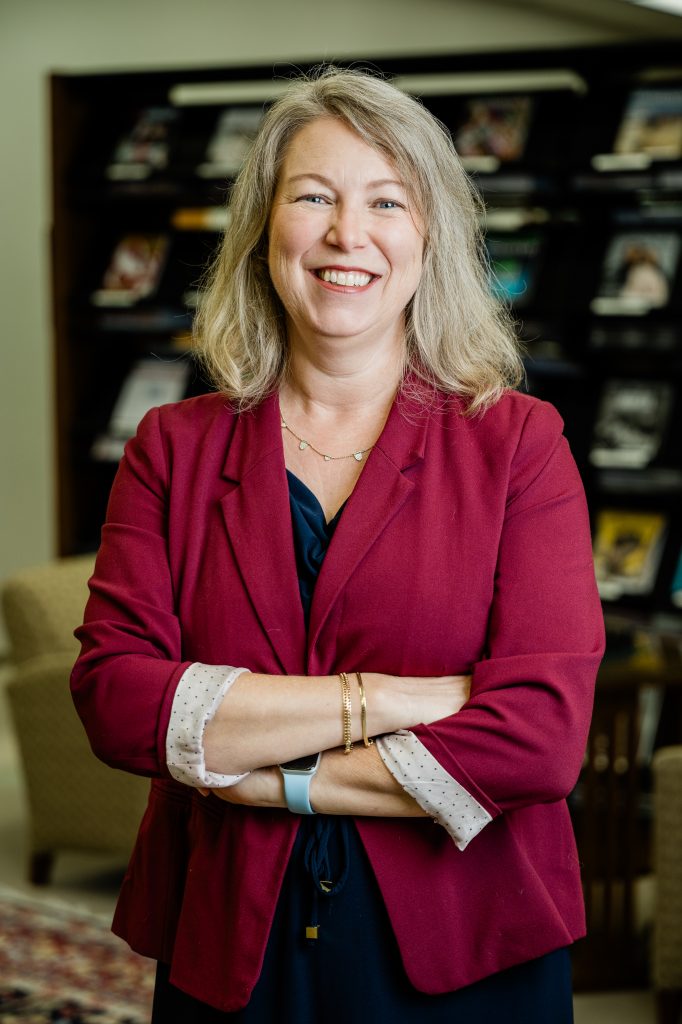
Catherine Bourland Ross is a professor of Spanish at Southwestern University in Georgetown, Texas.